Mini Fidget Antistress Games
- 4.5
- Rating
- 10.00M
- Installs
- Free
- Price
 Analysis by App-foxy
I picked up Mini Fidget Antistress Games expecting a quick distraction, and that is exactly where it works best. This is a casual game from The Fashion Valley built around small, calming activities and virtual pop-it toys rather than a long campaign, competitive ranking, or complicated objective. I can open it when I have a few spare minutes, choose something tactile, and stop without feeling that I have abandoned a larger task.
That simple design also makes it interesting on a shared phone or tablet. Someone in the household can use it for a short break, then hand the device to another person without needing to explain a story, preserve progress, or coordinate a multiplayer session. My overall impression is positive, but with an important qualification: this is a relaxation toy in game form, not a deep puzzle collection. If you want lasting progression, demanding challenges, or a carefully structured family game, you may eventually find it too light.
How it feels when a household shares one device
The strongest everyday use case is a device that moves between people during small gaps in the day. Imagine one person waiting for an appointment, another taking a short break from chores, and a child wanting a little screen time later. The game suits that pattern because its appeal is immediate. You do not need to remember a complex control scheme or understand a plot before starting.
You May Also Like

 Blood Strike: 2.5 Anniversary
Blood Strike’s Loadouts Turn Every Drop Into a Tactical Gamble
A close look at Blood Strike’s custom loadouts: how fast access to signature weapons reshapes its battle royale rhythm, rewards preparation, and narrows the gap between fights.

 Pandora - Music & Podcasts
Pandora’s Music Is Easy to Start, but Harder to Recover
Pandora’s strength is its low-effort path from a seed to a station. Its weak spot is how much confidence it asks you to place in connection, setup, and quiet recovery.

 8 Ball Pool
 Is Built on Rivalries, Rematches, and Routine
A close look at the rivalries, rematches, shared routines, and unanswered safety questions that turn a quick pool match into a persistent mobile community.

 Samsung Music
’s Quiet Strength Is Playing What You Already Own
Its reach comes less from spectacle than from dependable access to a personal library. That simplicity is both the app’s strongest retention engine and its ceiling.

 AccuWeather: Weather Radar
AccuWeather Review: A Quick, Clear Forecast for Everyday Decisions
For everyday plans, the best forecast is the one you can understand quickly. AccuWeather makes rain timing, radar, and local conditions easy to act on, with a few trade-offs.

 Hill Climb Racing
Why Hill Climb Racing Still Turns Crashes Into One More Run
A tiny car, a bumpy hill and one more upgrade: Hill Climb Racing keeps resurfacing because its simple chaos makes every near-miss feel personal.
More From Our News Desk



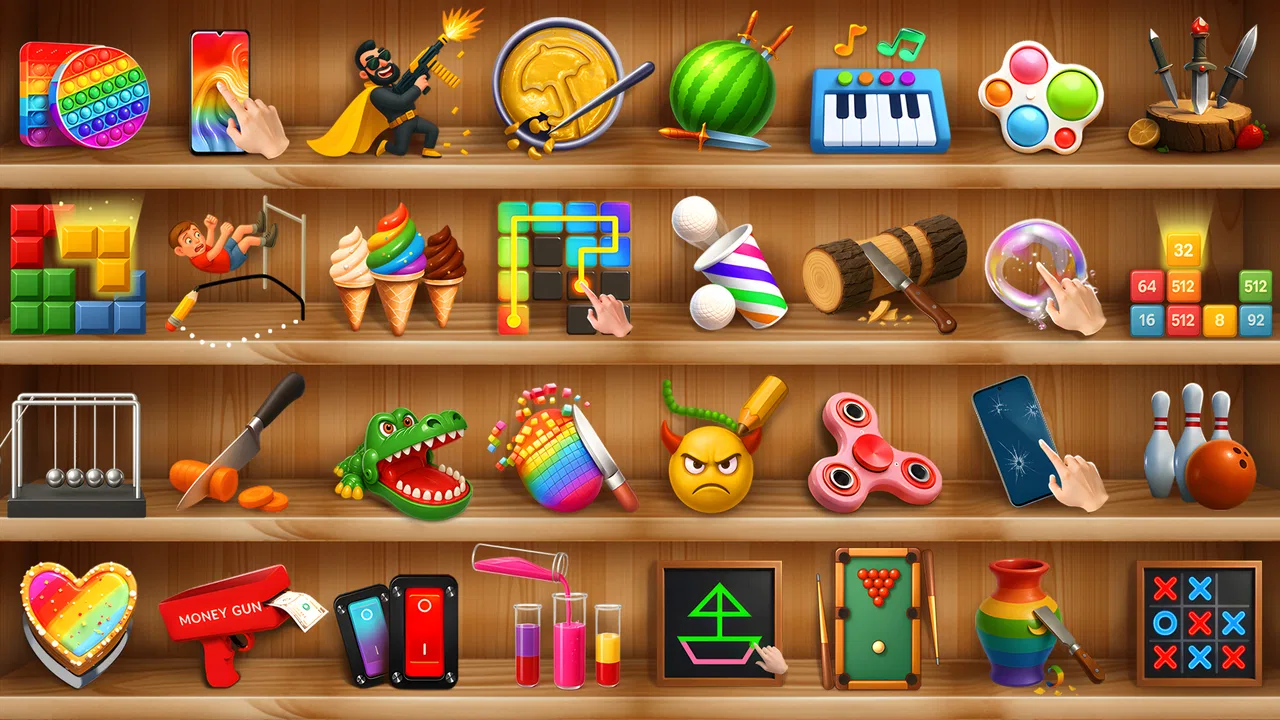
I found the pop-it style activities especially suitable for short sessions. They give the hands something repetitive to do while the mind settles, which is different from playing a fast arcade game that demands constant attention. The experience is closer to digital fidgeting than to traditional level-based gaming. That makes it useful after a busy day, during a quiet pause, or when someone wants entertainment without committing to a full play session.
On a shared device, the lack of a large personal identity is both convenient and limiting. A person can simply open the game and play, but the experience does not feel like a private profile with carefully separated records. I would therefore treat it as a communal diversion rather than a personal game account. Before passing the device around, I would close any store or purchase screen and make sure the next player understands that the game is being used casually, not as a place to manage separate household progress.
This matters most when different people have different expectations. An adult may enjoy the repetitive sensory quality, while a younger player may look for goals, rewards, and visible advancement. The same mini game can feel soothing to one person and boring to another. I would let each user try it briefly rather than presenting it as a guaranteed hit for everyone.
There is also a practical benefit to the short-session format: it is easy to establish a natural stopping point. Instead of saying that someone must quit in the middle of a long match, I can suggest finishing the current activity and handing over the device. That does not create formal household controls, but it makes informal coordination easier. The game is at its best when everyone understands that it is a small shared break, not the main event.
What the first session tells you
The first session gives a fairly accurate picture of the whole product. The store summary presents a collection of relaxing mini games centered on pop-it toys, and my experience matches that direction. The attraction comes from variety within a narrow mood: different ways to tap, press, or interact with calming objects, rather than a dramatic change of genre from one activity to the next.
That focus is helpful because it keeps the game approachable. I did not feel pushed to learn a complicated system before enjoying it. It is also the main reason some players may lose interest. If you install it hoping for logic puzzles, action stages, or a strong sense of achievement, the relaxed format may seem shallow. The game does not need to become something else, but it is worth understanding what you are downloading.
The short description calls it “Mini Fidget,” and that is a better expectation than imagining a full-sized casual game with a broad progression system. I would describe it as a pocket collection of tactile diversions. The distinction is important when choosing it for a child or for a shared family device: it can fill a quiet moment, but it may not hold attention through a long car journey or an entire evening.
Boundaries before handing over the phone
Because the game is free to install, it is easy to try without making a financial commitment at the start. It does include in-app purchases priced from $4.99 to $5.99 per item, so I would set a clear household rule before giving the device to a child or another casual user. The simplest approach is to agree that nobody confirms a purchase without asking the device owner first.
I would also keep the operating system question in mind. The game supports Android 8.0 and later, which covers many devices but not every older phone or tablet. If you are preparing a shared device that has been sitting unused for years, check its software before assuming the game will run. This is a small step, but it avoids turning a planned family break into a troubleshooting session.
My other boundary would be time rather than money. Relaxing interactions can make a game feel harmless, yet a person can still spend longer than intended tapping through repetitive activities. For adults, a simple timer or a verbal stopping point is enough. For younger users, I would decide the session length together before handing over the device. That keeps the game in its proper role: a brief calming activity, not an automatic default whenever someone feels bored.
Shared devices introduce a second kind of boundary. I would avoid leaving the game open beside unrelated personal apps, especially if a child is using the phone. This is not because the game needs complicated account management; it is simply good device etiquette. Open the activity, supervise the first purchase-related interaction, and return to the normal home screen afterward.
There is no need to create a separate household ritual around every session, but a little preparation improves the experience. Decide who is using the device, whether purchases are allowed, and when the handover happens. Those three decisions remove most of the friction I noticed when imagining the game in a family setting.
Coordinating turns without turning it into competition
Mini Fidget Antistress Games is not the kind of title I would choose for direct cooperation. Its appeal is individual interaction with small virtual objects, not shared objectives that require two people to act together. That is not a defect; it simply means coordination happens around the game rather than inside it.
For two people sharing one device, taking turns works better than trying to play simultaneously. One person can choose an activity, use it for a short period, and then pass the phone over. I would avoid judging who used the “best” mini game or who lasted the longest, because competition changes the mood. The game feels more successful when the household treats it like passing around a fidget toy, not like a tournament.
A useful routine is to let each player choose a different activity during their turn. That creates a small sense of variety without pretending that the game has a large cooperative structure. It also helps reveal who enjoys the tactile interactions and who would rather use a conventional puzzle or board game. In my view, this is one of the more practical ways to use the title with mixed ages: give everyone a brief chance, then choose a better shared activity if the mood calls for conversation or teamwork.
For a parent or caregiver, the important question is not whether the game supports formal coordination, but whether the device can be passed around calmly. Here, the low-pressure format helps. There is no need to protect a teammate from losing or wait for a round to end. The trade-off is that the experience does not give people much to discuss afterward. It creates quiet individual relaxation more readily than shared memories.
Compared with a physical pop-it toy, the app offers more variety in one place and does not require carrying another object. Compared with a standard puzzle game, it asks less concentration but also provides less mental challenge. Compared with a multiplayer casual title, it is easier to share informally but much weaker for genuine interaction. Those comparisons clarify where it belongs: between a digital toy and a very light game.
Age, trust, and choosing the right player
The content rating is Everyone 10+, which gives families a useful starting point when deciding who should try it. I would still judge the situation by the child, the device, and the household rules rather than treating an age label as a complete parenting decision. A younger child may understand the simple interactions, while an older child may quickly ask for more challenge than the game provides.
Trust matters because the game is free but contains paid items. If a child uses an adult’s device, I would explain the purchase rule in plain language before the first session. The discussion does not need to be dramatic: the game can be played casually, but anything that costs money requires permission. That is a sensible boundary for any app with optional purchases, and it is particularly easy to forget when the surrounding experience feels like a harmless toy.
I would also watch for sensory preference. Repetitive tapping and pop-it interactions can be pleasant for one person and irritating for another. A player who dislikes looping sounds, repeated motion, or simple touch activities may not find the game calming at all. If the goal is relaxation, the user’s response matters more than the label. The right test is whether the person feels more settled afterward, not whether the app looks soothing in the store.
Adults should not assume that a child will use the game only as a calming tool. Children may turn any interactive object into a source of excitement, repetition, or negotiation over whose turn comes next. That is normal, but it means the household should frame the game accurately. It can support a quiet pause; it is not a replacement for sleep, conversation, outdoor play, or a structured activity.
The developer, The Fashion Valley, has positioned this release in the casual space, and that audience fit is clear. I would recommend it most confidently to people who already enjoy fidget toys or low-stakes touch interactions. I would be less likely to recommend it to someone who wants a story, strategic depth, precise goals, or a strong reward loop.
Where it stands beside familiar alternatives
The most obvious alternative is a physical fidget toy. A real pop-it has a satisfying tactile presence and can be used without a battery or screen. The app answers that limitation with portability and multiple activities in one digital package. If you already own a physical toy and want deeper sensory feedback, the app may feel like a compromise. If you want several variations without filling a drawer, the digital format is more convenient.
Another alternative is a conventional casual puzzle game. Those games usually offer clearer objectives, better-defined failure states, and a stronger reason to return. Mini Fidget Antistress Games is gentler because it does not make me feel that I must improve or complete a demanding task. The cost of that gentleness is limited motivation. I can relax with it, but I am less likely to plan my day around returning to it.
It also differs from meditation and breathing apps. Those tools are designed around guided attention and a deliberate calming routine, while this game uses interaction and repetition. I prefer the game when I need my hands occupied and do not want to follow spoken instructions. I would choose a dedicated mindfulness app when I want a structured exercise rather than a playful distraction.
Against a multiplayer game, the title is easier to share but less socially rewarding. There are no team plans to make, no match outcome to discuss, and no need for everyone to be online together. That makes it practical in a household with one device, but it also means it cannot replace a game chosen specifically for family participation.
Version, value, and the limits of a simple format
The current version is 0.2.3, and that version number makes me approach the game as a relatively early-feeling casual experience rather than a huge, finished platform. The core idea is understandable from the first use, which is a strength. I do not have to invest time learning menus or systems before deciding whether the tactile style suits me.
At no upfront cost, it is reasonable to install and test during a short break. The paid items mean that “free” should be understood as free to begin, not as a promise that every optional element costs nothing. I would not spend money immediately. First, I would see whether the available activities already provide enough variety for the intended user, especially if the game is being considered for a child or a shared tablet.
The biggest limitation is repetition. A fidget-based game depends on the pleasure of the interaction itself, so once that sensation becomes familiar, the absence of deeper progression becomes more noticeable. This is not a problem for five-minute sessions, but it matters if you expect a game that can occupy you for hours. My advice is to judge its value by how often it helps you take a pleasant short break, not by how much total screen time it can produce.
I also would not use it as the only entertainment app on a household device. It works better as one option among several: perhaps beside a puzzle game for focused play, a reading app for quiet time, or a physical fidget toy for screen-free use. Its narrow purpose becomes a strength when it has a clear place in the routine, and a weakness when someone expects it to cover every kind of casual entertainment.
My household verdict
After using it as a small, low-pressure distraction, I see Mini Fidget Antistress Games as a good fit for people who want digital fidgeting rather than a conventional game. Its average rating is 4.5 from around 27 thousand ratings, and it has passed 10 million installs, so the concept has clearly reached a substantial audience. Those figures do not change my main advice: choose it for the mood and the short-session format, not for progression or multiplayer depth.
I would recommend it to an adult who likes pop-it toys, to a household sharing one device, or to a player who wants something easy to start and easy to stop. I would also consider it for a supervised age-appropriate break, with the purchase rule explained beforehand. The free entry point makes trying it straightforward, while the optional items are a reason to keep normal household payment boundaries in place.
I would skip it if your priority is a challenging puzzle collection, a story-driven game, competitive play, or a rich family activity that everyone can enjoy together at once. In those situations, a physical toy, a deeper puzzle title, or a purpose-built multiplayer game will serve you better. This app is more modest than those alternatives, but its modesty is also why it can fit neatly into a busy day.
My final recommendation is to treat it as a digital fidget break, not as a full gaming destination. Used that way, it is pleasant, accessible, and easy to share informally. Set expectations around age, time, and purchases, let each household member try it without pressure, and keep another option nearby for anyone who needs more challenge or more genuine cooperation.
FAQs for Mini Fidget Antistress Games
01What is Mini Fidget Antistress Games, and how does it help reduce stress?
Mini Fidget Antistress Games is a collection of interactive mini-games designed to help users relax and relieve stress. Each game simulates the tactile sensation of real-world fidget toys, providing a calming experience. The app offers a range of activities such as popping bubbles, spinning fidget spinners, and more, all aimed at promoting relaxation and mental clarity.
02Is Mini Fidget Antistress Games suitable for all age groups?
Yes, Mini Fidget Antistress Games is designed to be enjoyed by users of all ages. Its simple interface and intuitive controls make it accessible for children, while the variety of stress-relieving activities appeal to adults seeking a quick mental break. The app is family-friendly and free of inappropriate content, ensuring a safe experience for everyone.
03Does Mini Fidget Antistress Games require an internet connection to play?
No, Mini Fidget Antistress Games does not require an internet connection for most of its features. Users can enjoy the majority of the mini-games offline, making it an excellent choice for stress relief on-the-go. However, some updates or additional content may require internet access to download.
04Are there any in-app purchases or advertisements in Mini Fidget Antistress Games?
Mini Fidget Antistress Games is free to download and play but does contain optional in-app purchases that unlock additional features or remove ads. Users can choose to upgrade for an ad-free experience, although the base version of the app remains functional and enjoyable without spending money.
05What devices and operating systems are compatible with Mini Fidget Antistress Games?
Mini Fidget Antistress Games is available for both Android and iOS devices. It supports a wide range of smartphones and tablets, ensuring compatibility with most modern devices. Users are encouraged to check the app store for specific system requirements to ensure their device is supported for optimal performance.
Pros
- Wide variety of fidget games available.
- Simple interface
- easy to navigate.
- Quick load times for instant play.
- No internet required for most games.
- Suitable for all ages
- kid-friendly.
Cons
- Contains ads that can interrupt play.
- Limited customization options.
- Graphics are basic
- not high-end.
- Some games are repetitive over time.
- In-app purchases can be pricey.

Mini Fidget Antistress Games
Gallery